The Snake River Series:

The Snake River Series:

Fighting for the River

Fighting for the River

The river he protected. The knife that carries it.

The Snake River Bird & Trout carries the same story as the whole collection — a topographic engraving of the river's course etched on both sides of the blade, and a one-of-a-kind stabilized maple and azure resin handle, hand-finished in the Teton Valley. No two alike. Below, the story of how our founder spent decades protecting the water this knife is named for.

Order Yours

Part Two of Three:

Corey Milligan and the Snake River

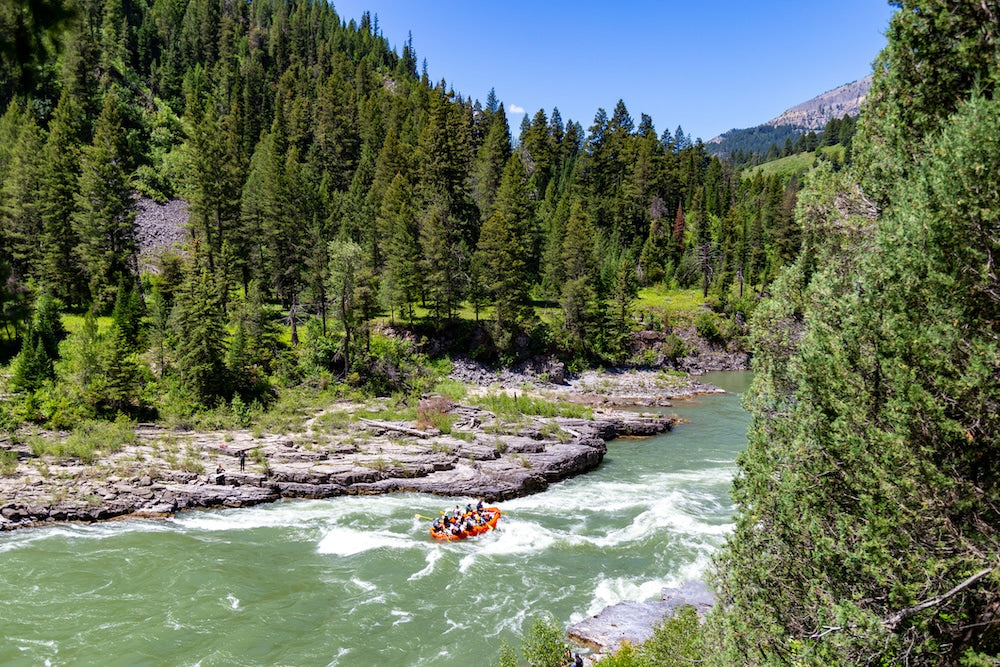
By the mid-1990s, Corey Milligan had spent years on the Snake River as a guide, a kayaker, and eventually the manager of Mad River Boat Trips' guide staff. He loved the river. He also saw, clearly, that the people responsible for keeping people safe on it weren't taking it seriously enough.

"Mad River had been around since almost the dawn of rafting," he says, "and it was just sort of cowboy in terms of how things were done and what kind of safety was used."

Most years, the Snake through its whitewater canyon was manageable — even forgiving. But Corey had been on the river in flood. He'd seen what it could do. He wasn't willing to wait for something to go wrong.

"I was able to change the paradigm in a lot of ways, which the folks at Mad River were open to."

The first change was requiring wetsuits. The second was something more ambitious: a comprehensive swiftwater rescue training program, led by a man named Mick Hopkinson.

Hopkinson was, by any measure, the most experienced kayaker in the world at the time. He was not American, and his approach to river rescue was far ahead of what was happening in the United States. At the time, swiftwater rescue training in this country was mostly designed for urban fire departments — getting people out of flooded streets. Hopkinson brought a different standard entirely.

"His practices were cutting edge," Corey says. "Beyond anything going on in the United States."

The training stuck. Because of his work at Mad River, Corey was asked to join the Teton County Search and Rescue team, where he served as lead swiftwater rescue trainer for a decade.

"I spent a lot of time designing trainings to simulate very dangerous situations — things that would actually happen out there." He was involved in many rescues on the Snake and its tributaries over those years. The river he loved, he was also protecting.


But rescue, Corey understood, was downstream of a deeper problem. The Snake River was beloved — by guides, by tourists, by fishermen and kayakers and families on summer floats — but that love wasn't organized. It wasn't doing anything.

In the late 1990s, Corey became one of the founders of the Summit on the Snake, a two-day symposium built around educating river guides on everything related to the waterway — ecology, history, conservation, geology.

"Before that, guys just made things up," he says. "It wasn't professional. It wasn't accurate." The Summit changed that, giving guides real knowledge they could share with customers. But it was also, from the beginning, about something larger.

"The focus on conservation was intentional. If people have a love for the river, they're going to be more receptive to doing things to protect it."

The Summit planted a seed. It was, Corey believes, the main driver behind what eventually became the Snake River Fund — a nonprofit that started with a very practical problem (the put-ins on national forest land were underfunded, lacking basic maintenance) and grew into one of the most active river conservation organizations in Wyoming.

"It really started as a way to fund toilet paper and clean bathrooms," Corey says with a laugh. "But it grew into something that drove a lot of real initiatives."

When Corey returned to Jackson after a few years in California, he joined the Snake River Fund as a board member. Through that work, he got on the board of SEAFISH — the Committee for the Snake River Headwaters — whose mission was to achieve Wild and Scenic designation for the Snake and as many of its tributaries as possible.

The first step was data. The committee commissioned a study of water quality throughout the Snake River system.

"Because the Snake drains out of Yellowstone Park and Grand Teton, it shouldn't be a surprise," Corey says. "But the study found that the Snake River and its headwaters have the cleanest water in the United States."

That finding became a rallying point.

Wild and Scenic designation is an Act of Congress. It's a long fight — legislative, political, coalition-driven. Corey is careful not to overstate his role. "There were a lot of people involved. I certainly don't take sole credit." But he did things that mattered, at moments that mattered.

Around 2005 or 2006, the Snake River Headwaters Act was enacted. It protected sections of the Snake and many of its tributaries — and it was, at that time, the largest Wild and Scenic designation by river miles in the history of the Act.

"That was a good day," he says quietly.


Around the same time, Corey was involved in one more fight — quieter, more personal, but just as consequential for the local community.

In Wilson, at the bridge where the Snake River crosses beneath the road, there was a piece of land that the Snake River Fund had identified as critical. It would serve as a proper put-in for rafters. More importantly, it was the ideal anchor point for a pedestrian bridge crossing the Snake at that spot.

Before the group could act, a developer bought the property. His plan: large private lots, expensive homes.

Corey had a meeting with him.

"I was basically like — I'm going to make you famous," he says. The details stay private, but the outcome doesn't. The developer came around. The land was ultimately donated for public use.

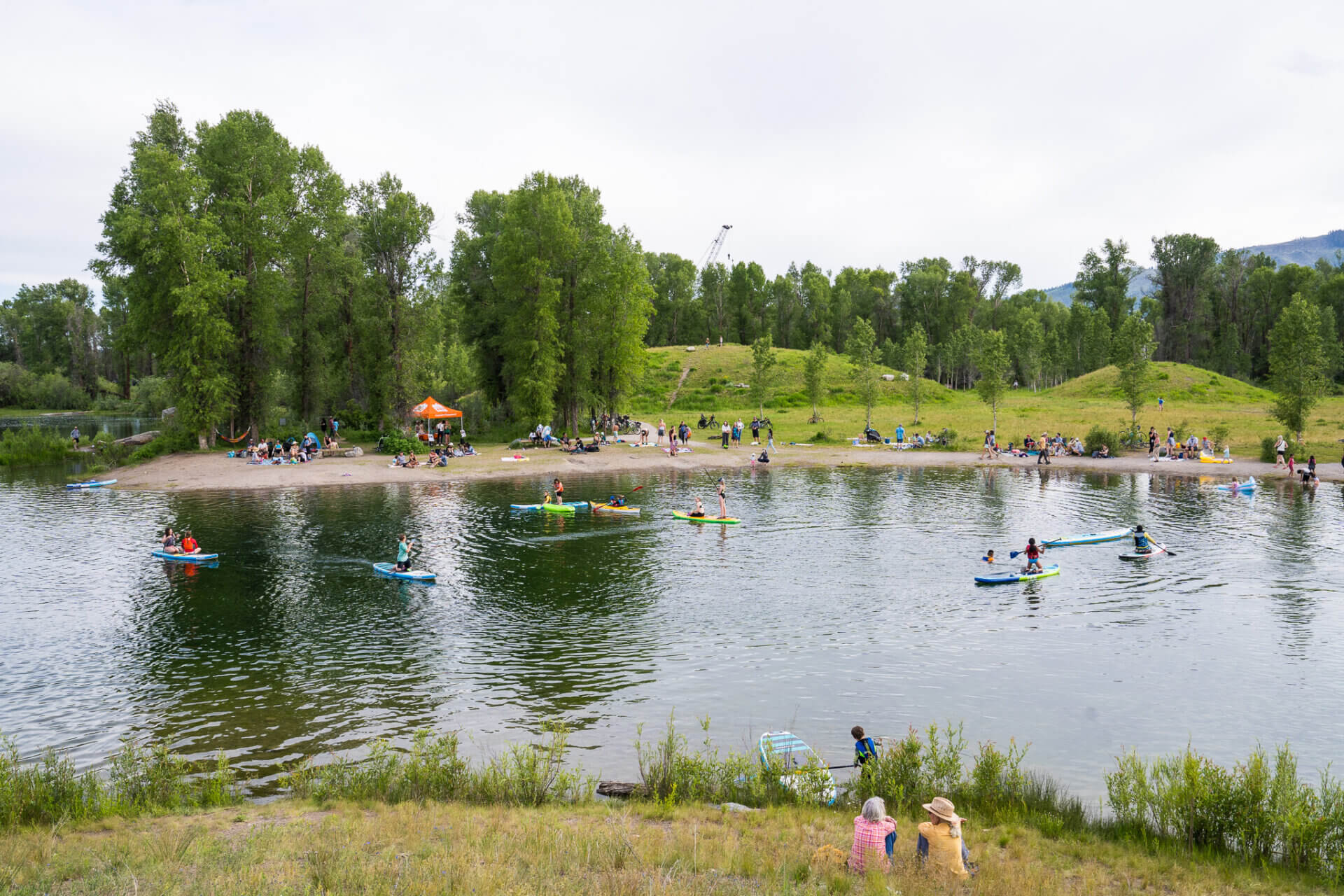
The pedestrian bridge that stands there today crosses the Snake at a spot where you can stop, lean on the railing, and look upriver toward the Tetons. Rendezvous Park — the green space that grew up around it — draws locals and visitors constantly.

"It gives me great pride," Corey says, "the amount of love and use it gets by the public. This was all private. No public money. Just people of Jackson Hole rallying together and doing the right thing."

Watch: R Park's Opening Celebration

A river that is the cleanest in the nation, protected by an Act of Congress. A park and pedestrian bridge where the public gathers to watch the water move. A rescue training program to protect those who love the water. None of it happened by accident.

The Snake River Collection from New West KnifeWorks carries that history. The topographic engraving on each blade traces a real section of this river — water that Corey has floated, fought for, and helped protect for more than three decades. The handle colors echo the canyon walls, the glacial blue-green of the current, the willows and cottonwoods along the bank. These are not just beautiful objects. They are a record of a place that mattered enough to fight for.

Next: How Corey brought the river home — raising three children who now paddle Class V whitewater, and why, in the end, even the most hardened kayaker finds himself out on the Snake with a fishing rod, just looking for an excuse to be on the water.